Why Granular (Danedar) Texture is the Ultimate Purity Test
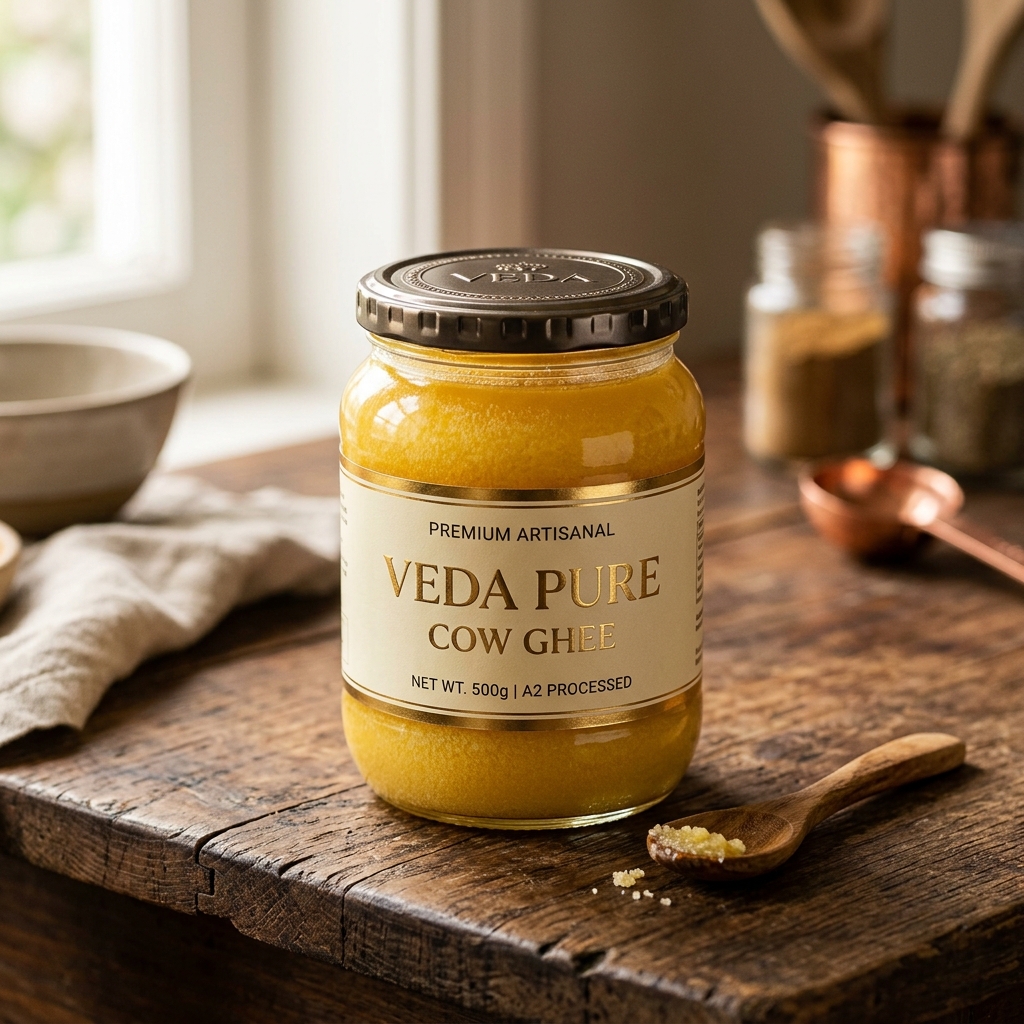
The Hallmark of Authentic Ghee
When you open a fresh jar of premium desi ghee, you shouldn't see a uniform, waxy solid. Instead, you should see beautiful, crystalline grains suspended in a semi-solid golden matrix. This highly sought-after texture is called Danedar (granular) in Hindi.
How Do the Grains Form?
The granular texture is not added; it is a natural chemical phenomenon resulting from the complex mixture of triglycerides (fats) in pure cow milk. These different fats have different melting points.
During the authentic Bilona cooking process:
Why Fake Ghee Isn't Danedar
Commercially adulterated ghee or ghee made quickly in factory centrifuges is often flash-cooled. This rapid cooling prevents the natural crystallization process, resulting in a smooth, homogenous, waxy texture similar to margarine or shortening.
Pro Tip for Testing: If your ghee has lost its grains due to weather changes (melting in summer), you can restore the *danedar* texture by gently melting it completely in a double boiler and then letting it cool slowly at room temperature over 24 hours. The crystals will return, proving its absolute purity!
Subscribe to Newsletter
Stay updated with traditional recipes, organic lifestyle tips, and exclusive discount opportunities on ghee.